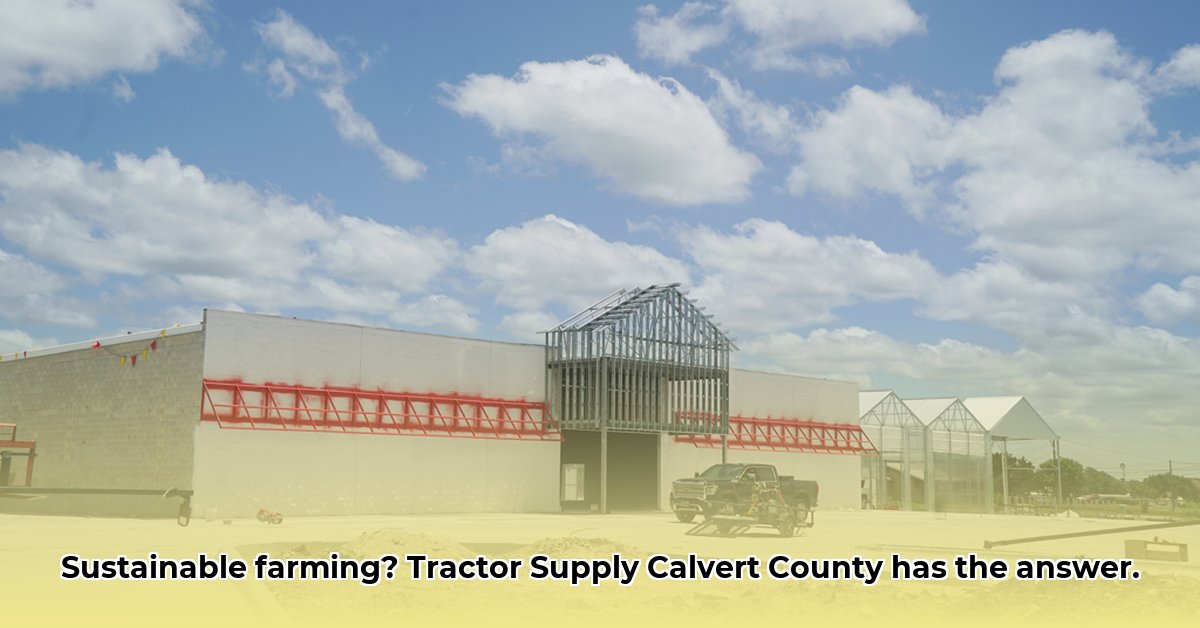
Tractor Supply (TSC) in Calvert County, Maryland, is more than just a farm supply store; it's a vital thread in the fabric of the county's burgeoning sustainable agriculture movement. This isn't simply about convenient access to seeds and tools; it's about empowering local farmers to cultivate a healthier, more resilient food system. But how does TSC contribute to this vision, what challenges remain, and how can we collectively nurture a brighter, more sustainable future? For additional resources on farm supplies, check out this helpful website.
Access to Essential Resources: A Farmer's Lifeline
Imagine Sarah Miller, a third-generation Calvert County farmer, facing a late-season planting challenge. A quick trip to her local TSC provides the specialized seeds she needs, saving precious time and resources. TSC stocks a wide array of essentials – from seeds and fertilizers to tools and animal feed – that are crucial for successful farming, regardless of scale. For small farms, this readily available supply chain is transformative, eliminating the logistical hurdles of sourcing materials from distant suppliers. The proximity of TSC significantly reduces both time and fuel consumption, directly improving the farm's economic viability and environmental footprint. This accessibility directly translates to increased local food production, ensuring fresher, locally-sourced ingredients for county residents. But how impactful is this convenient access? One could argue it's the very lifeblood of smaller farming operations.
Challenges and Opportunities: A Path to Improvement
While TSC undeniably plays a crucial role, the journey toward complete sustainability isn't without its challenges. The availability of fully organic and truly sustainable products, such as certified organic seeds and eco-friendly fertilizers, needs significant improvement. Furthermore, the broader environmental impact of TSC's operations—including its supply chain and energy consumption—remains an area for investigation and improvement. However, these challenges shouldn't be viewed as roadblocks but rather as opportunities for growth. Envision a future where TSC actively collaborates with local farmers and environmental organizations, expanding its range of organic and sustainable products, and hosting workshops on environmentally sound agricultural practices. The potential benefits for the community and the ecosystem would be profound. What small changes would have the largest impact?
The Broader Impact: Strengthening the Community
TSC's influence extends far beyond individual farms. Its accessibility strengthens the county's local food system, bolstering farmers' markets and community-supported agriculture (CSA) initiatives. This increased local food production has notable economic repercussions, supporting local employment and fostering a more self-sufficient community. The increased accessibility to resources enables smaller farms to not only survive but thrive, contributing to a more vibrant and resilient agricultural ecosystem. What better example of the symbiotic relationship between a local business and community well-being?
A Collaborative Path Forward: Building a Sustainable Future
The future of sustainable agriculture in Calvert County depends on collaborative efforts among all stakeholders.
Actionable Steps:
- Farmers: Communicate your needs for sustainable products to TSC and advocate for increased organic and ecologically sound options.
- Tractor Supply: Increase the selection of certified organic and sustainable products. Offer educational resources and workshops on improving environmental stewardship.
- Consumers: Support local farmers by purchasing directly from farmers markets and CSAs. Prioritize sustainable products at TSC.
- Local Government: Implement incentives, such as grants or tax breaks, to support the adoption of sustainable agricultural practices. Collaborate with TSC to develop a comprehensive sustainability strategy for the county.
TSC Calvert County has the power to be a catalyst for sustainable agriculture. By working together – farmers, TSC, consumers, and local government – we can cultivate a vibrant and sustainable future for the county's agricultural landscape. This collective commitment is key to ensuring a thriving agricultural community for generations to come. What role will you play in this collaborative endeavor?